

Roland Future Design Lab Previews Project LYDIA AI Audio Platform

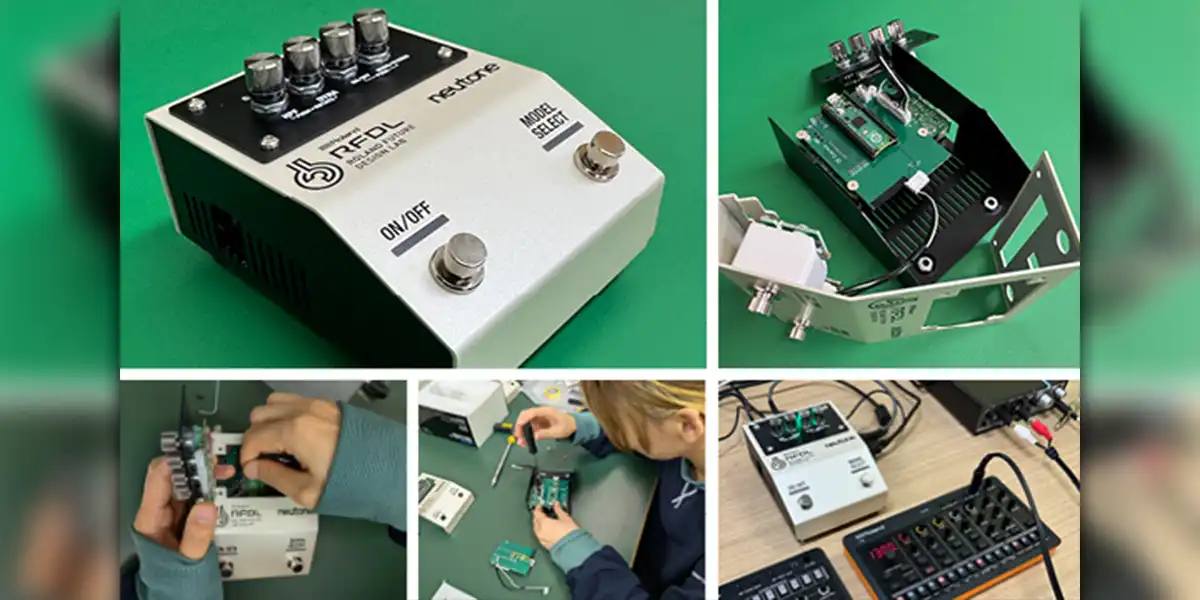
Roland Future Design Lab has unveiled Project LYDIA, a technology preview developed in collaboration with Neutone, creators of AI tools for musicians. The prototype combines Neutone’s trainable Morpho engine with Roland’s hardware design concepts, using a Raspberry Pi 5 computer to demonstrate how AI-driven sound processing might inspire a new generation of DIY creators.
Roland positions Project LYDIA as a modern reflection of the company’s early DIY efforts, including the AMDEK kits released in 1981 that encouraged hands-on experimentation. The new platform is designed to show how emerging AI techniques can support sound discovery in ways that are both practical and creatively open-ended.
Powered by Neutone’s Morpho technology, the platform uses what the company calls “neural sampling” to capture the tonal qualities of any sound and apply them to another source in real time. The prototype currently pairs a Raspberry Pi 5 with Neutone’s customized Morpho software and a simple control panel concept. Audio input and output are managed through a USB-connected Roland Rubix interface, with future versions expected to integrate I/O directly into the hardware.
Project LYDIA is part of Roland’s broader exploration of AI in music production. In 2024, Roland and Universal Music Group released the Principles for Music Creation with AI, a framework centered on ethical, artist-focused innovation.
“Roland has taken a leadership role globally in practicing responsible development with AI for music creation,” said Paul McCabe, senior vice president of research and innovation at Roland. “Part of being responsible is getting input from creators on what they find useful, helpful, or inspiring, and what ideas may not be welcome in their workflows. Releasing Project LYDIA as a technology preview allows us to demonstrate possibilities, seek community input, optimize, and improve.”
Project LYDIA debuted at the Audio Developer Conference, held Nov. 10–12 in Bristol, U.K., where Roland invited musicians and developers to provide feedback through a short survey. The company said the responses will help inform ongoing research into AI-assisted sound tools.


More Stories Like This

Roland Debuts New Streaming Switcher and Graphics Presenter Software to Support In-House Production Applications

Roland announced multiple additions to its ProAV lineup includes the V-80HD Direct Streaming Video Switcher, a compact hybrid event switcher with a plethora of video connectivity, advanced automation features, and SRT support. In addition, it launched the Graphics Presenter software provides a solution for creating professional titles and motion graphics for live productions with the […]
Roland Releases BRIDGE CAST X Desktop Interface for Gaming, Livestreaming
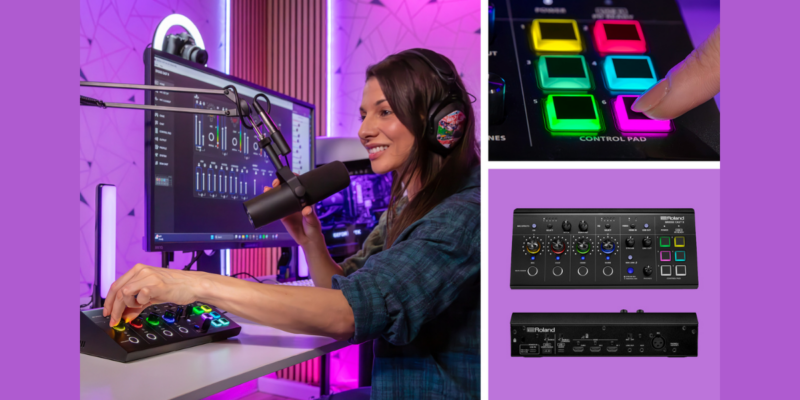
Roland announced BRIDGE CAST X, the latest addition to the BRIDGE CAST products for online gaming and livestreaming. BRIDGE CAST X is a desktop interface and connection hub that allows streamers to simplify setups and improve their content by giving them USB-C, HDMI, and audio ports and an XLR mic input, assignable control pads, and […]
Roland Announces VR-6HD Direct Streaming AV Mixer
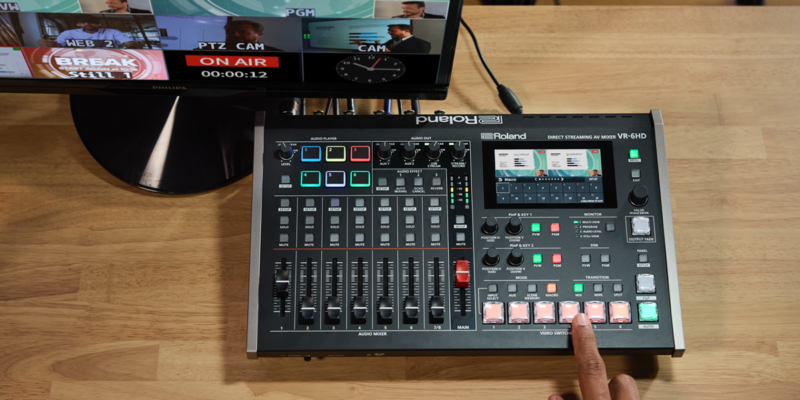
Roland’s Professional AV Division announces the VR-6HD Direct Streaming AV Mixer, a “compact all-in-one hub for business livestreaming.” Offering core features from the flagship VR-120HD in a portable format, the VR-6HD is intended for corporate meetings, online sales presentations, worship services and other professional applications. Video switching, audio mixing and LAN/USB streaming encoders are integrated […]