
 If you’re like me, when you first heard about carbon offsetting and carbon neutrality years ago, you rejoiced at being able to purchase a certificate that said we were doing the “right thing.” In our innocence, we figured we no longer had to feel guilty or concerned about the implications of our equipment wattage reaching the tens of thousands in a single, average-sized production.
Alas, as the business world was treated to a greenwashing smackdown, we learned that offsetting wasn’t the magic elixir that evaporated GHGs* as we had hoped. Over time though, we also recognized that offsetting is still a viable element of sustainability planning when done properly. Hopefully this month I can give you a few insider tips on how to effectively offset as an operator in the (primarily Rental & Staging) professional AV industry, without incurring the furious scrutiny of the green police (not to be confused with the subject of a great Cheap Trick song).
The first thing you need to know is that offsetting IS ALWAYS the last step in a comprehensive sustainability plan. Go back through the last two years of rAVe GreenAV columns of awesomeness and study every word we have told you about how to develop this plan. And then do it. No, seriously, do it now. Because a major step in most of these plans encourages you to reduce your environmental impact before you ever think about offsetting. This usually includes sourcing as many resources locally as is humanly possible, such as labor, materials, gear and any other elements of our systems. Transportation is a big, fat producer of GHGs and can often be avoided with better planning and awareness. Your plan should also include on-site recycling, designing more energy efficient lighting, using equipment that is lighter and more energy efficient, measuring your impact… you get the idea.
OK, so I’ve harried you enough and you’ve implemented your plan. You’ve earned the right to offset. So here’s what you need to know: If you’re like me, when you first heard about carbon offsetting and carbon neutrality years ago, you rejoiced at being able to purchase a certificate that said we were doing the “right thing.” In our innocence, we figured we no longer had to feel guilty or concerned about the implications of our equipment wattage reaching the tens of thousands in a single, average-sized production.
Alas, as the business world was treated to a greenwashing smackdown, we learned that offsetting wasn’t the magic elixir that evaporated GHGs* as we had hoped. Over time though, we also recognized that offsetting is still a viable element of sustainability planning when done properly. Hopefully this month I can give you a few insider tips on how to effectively offset as an operator in the (primarily Rental & Staging) professional AV industry, without incurring the furious scrutiny of the green police (not to be confused with the subject of a great Cheap Trick song).
The first thing you need to know is that offsetting IS ALWAYS the last step in a comprehensive sustainability plan. Go back through the last two years of rAVe GreenAV columns of awesomeness and study every word we have told you about how to develop this plan. And then do it. No, seriously, do it now. Because a major step in most of these plans encourages you to reduce your environmental impact before you ever think about offsetting. This usually includes sourcing as many resources locally as is humanly possible, such as labor, materials, gear and any other elements of our systems. Transportation is a big, fat producer of GHGs and can often be avoided with better planning and awareness. Your plan should also include on-site recycling, designing more energy efficient lighting, using equipment that is lighter and more energy efficient, measuring your impact… you get the idea.
OK, so I’ve harried you enough and you’ve implemented your plan. You’ve earned the right to offset. So here’s what you need to know:
 *GHG = Green House Gas emissions are gasses that trap heat in the earth’s atmosphere. As determined by the Kyoto Protocol, these gasses include Carbon dioxide (CO2), Methane (CH4), Nitrous oxide (N2O), Sulfur hexafluoride (SF6), Hydrofluorocarbons (HFCs) and Perfluorocarbons (PFCs).
Midori Connolly is CEO and Chief AVGirl of Pulse Staging & Events, Inc. in Escondido, California. She wrote the first-ever set of Sustainable Staging guidelines after discovering none existed. She is the vice-chair of the AV committee for the U.S. EPA’s Green Meetings Standards and regularly speaks and writes about corporate social responsibility and green practices in live events and meeting planning. Reach her at [email protected]
Leave a Comment *GHG = Green House Gas emissions are gasses that trap heat in the earth’s atmosphere. As determined by the Kyoto Protocol, these gasses include Carbon dioxide (CO2), Methane (CH4), Nitrous oxide (N2O), Sulfur hexafluoride (SF6), Hydrofluorocarbons (HFCs) and Perfluorocarbons (PFCs).
Midori Connolly is CEO and Chief AVGirl of Pulse Staging & Events, Inc. in Escondido, California. She wrote the first-ever set of Sustainable Staging guidelines after discovering none existed. She is the vice-chair of the AV committee for the U.S. EPA’s Green Meetings Standards and regularly speaks and writes about corporate social responsibility and green practices in live events and meeting planning. Reach her at [email protected]
Leave a Comment
   Share Article
 A new distribution company was announced today, Energy Squad, which will focus on offering environmentally-friendly equipment to the custom install market. Energy Squad will offer products such as LED lighting, home automation systems, AV equipment, HVAC, energy management solutions and more.
Energy Squad will also work with its vendors and partners to develop environmentally-friendly products designed to address the specific needs of the custom installation industry. It will also offer educational opportunities to its customers and the industry.
“We have seen how limited professional systems integrators are when it comes to finding resources to provide them with information on the latest in environmentally-friendly products,” said Jonathan Stovall, founder and CEO of Energy Squad. “Energy Squad grew out of our desire to help fill that void based on our passion to promote the growth of green technology products and services. Now, integrators will have a trusted distribution partner that they can turn to for exclusive green tech products, service, education and support. At Energy Squad, we are green tech.”
Authorized Energy Squad dealers can have products shipped anywhere in the U.S., with select purchases qualifying for free freight.
Energy Squad will make its official debut to the custom installation industry at CEDIA EXPO 2012 (booth #1221, shared with Rosewater Energy), held September 6-8 in Indianapolis, Ind.
Energy Squad’s assortment of environmentally-friendly products will be available beginning Q4 of 2012.
For more information, go to http://www.energysquad.com
Leave a Comment
Share Article A new distribution company was announced today, Energy Squad, which will focus on offering environmentally-friendly equipment to the custom install market. Energy Squad will offer products such as LED lighting, home automation systems, AV equipment, HVAC, energy management solutions and more.
Energy Squad will also work with its vendors and partners to develop environmentally-friendly products designed to address the specific needs of the custom installation industry. It will also offer educational opportunities to its customers and the industry.
“We have seen how limited professional systems integrators are when it comes to finding resources to provide them with information on the latest in environmentally-friendly products,” said Jonathan Stovall, founder and CEO of Energy Squad. “Energy Squad grew out of our desire to help fill that void based on our passion to promote the growth of green technology products and services. Now, integrators will have a trusted distribution partner that they can turn to for exclusive green tech products, service, education and support. At Energy Squad, we are green tech.”
Authorized Energy Squad dealers can have products shipped anywhere in the U.S., with select purchases qualifying for free freight.
Energy Squad will make its official debut to the custom installation industry at CEDIA EXPO 2012 (booth #1221, shared with Rosewater Energy), held September 6-8 in Indianapolis, Ind.
Energy Squad’s assortment of environmentally-friendly products will be available beginning Q4 of 2012.
For more information, go to http://www.energysquad.com
Leave a Comment
Share Article
|
||||||||||||





 We continue our Inside the EcoChamber series with Jim Sinopoli, founder of Smart Buildings, LLC. Smart Buildings provides owners, developers and architects with ways to manage, operate and meet their environmental and financial objectives through building systems.
 Jim Sinopoli: I started in control systems for airplanes, got into design, construction and operation of buildings, and slowly took on all systems after a client requested total integration. By training I’m an aeronautical and astronautical engineer. In school I concentrated on the control systems for airplanes, so I knew something about systems and networks. Then I worked at a research lab and did a project for the federal government on satellites for states in the Midwest that shared a satellite to trade government data. Eventually I landed at a consulting firm where I worked on building systems, telecomm, security and AV. We started doing building control systems and then were asked by a client — Ave Maria University in Naples, Florida — to try things a little differently. We designed and bid all of the systems under one contract so we could get a master systems integrator to take on everything related to cabling, control and IT. The metrics showed that the savings on that project were pretty significant, so from there we thought, well, we’re doing all the systems and talking about integration, maybe we can move toward integrated automation.
SW: Your smart buildings reference book, Smart Building Systems for Architects, Owners and Builders, is one of the few on this subject. What need were you trying to fulfill by writing this book?
Jim Sinopoli: I started in control systems for airplanes, got into design, construction and operation of buildings, and slowly took on all systems after a client requested total integration. By training I’m an aeronautical and astronautical engineer. In school I concentrated on the control systems for airplanes, so I knew something about systems and networks. Then I worked at a research lab and did a project for the federal government on satellites for states in the Midwest that shared a satellite to trade government data. Eventually I landed at a consulting firm where I worked on building systems, telecomm, security and AV. We started doing building control systems and then were asked by a client — Ave Maria University in Naples, Florida — to try things a little differently. We designed and bid all of the systems under one contract so we could get a master systems integrator to take on everything related to cabling, control and IT. The metrics showed that the savings on that project were pretty significant, so from there we thought, well, we’re doing all the systems and talking about integration, maybe we can move toward integrated automation.
SW: Your smart buildings reference book, Smart Building Systems for Architects, Owners and Builders, is one of the few on this subject. What need were you trying to fulfill by writing this book?
 JS: We are really in the design and construction industry, so for a time I was doing lunch-and-learns about smart buildings for architectural firms. What I found was that a lot of architects didn’t know much about building systems; they know about the static parts of the building, but not about the building systems themselves. The design and integration of building systems were really left to mechanical engineers, electrical engineers and contractors. The goal of the book was to lay out basic things about each of the systems and building operations and how to go about integration of systems.
SW: What are the biggest hurdles still out there that are impeding the growth of the smart building market? Do owners not know what is possible? Are RFPs not written to deliver it? Are design teams not structured right? Why don’t projects that should be smart buildings end up that way?
JS: Those are probably all true. Owners want a smart building because they like the concept, but they really don’t know a lot about the details. And at the design table we see many designers repeating designs the delivered for other clients rather than putting in the work to do something different.
Also, the design and construction industry had not changed in decades; then in the late ‘90s when energy became the focus, design and construction had to change. At that time very few people had experience with new systems such as exterior shading, water reclamation, sun tracking systems and other new building systems, and we began to see a big disconnect between what is currently being taught in schools and the skillset needed to operate newer, complex buildings. So a major obstacle is having a new complexity to designing, operating and maintaining building systems and having fewer qualified people to actually manage them.
SW: What impact has the economy had on the smart building movement? In terms of sustainability and LEED, we didn’t see any change for several years, but more recently it appears that people are following the tenets but not necessarily going for certification. In this economy and with the current trend in energy prices, it seems that a savvy building owner — particularly in hospitals and universities — might say, I want a smart building because I’m going to own it for many years. But are they making the decision not to pursue because of first-cost fears as opposed to long-term savings?
JS: Well, there’s obviously less new construction going on in the U.S. than we had a few years back, but I also think focus on building systems has become an integral part of design and operations of buildings. There are also building owners that have portfolios of campuses where they have significant existing buildings and square footage and they have corporate mandates for energy management, but they simply can’t get their arms around what they’re consuming and spending, so they’re going the integrated approach to meet those requirements.
SW: Are there vertical markets that look stronger than others?
JS: We have two large health care clients right now, one of which is primarily concerned with managing demand and eventually procuring energy based on the aggregated data from their hospitals.
SW: So they’re looking at leveraging the data gathering to make a more intelligent purchase of energy, based on their demand load predictions?
JS: Yes, they’re trying to do two things. First, on the demand side, they can get information on their hospitals and test energy conservation measures, and if they work the client can standardize those measures across their portfolio of hospitals. Second, on the procurement side, the client spends more than a couple hundred million dollars a year on power and natural gas, so if they can develop some energy profiles from certain hospitals, aggregate those energy loads and then go to the regional energy market, they are likely to save 10 to 15 percent of the cost of the energy, which is a significant chunk of change.
SW: You did a project with Microsoft not too long ago. What was their interest in smart buildings?
JS: Microsoft has a corporate mandate to address and manage energy and sustainability, but they were challenged by compiling all their systems data in one place. We were involved with designing their integration requirements to get all that relevant data; then we created specifications and helped them pick vendors to pilot different software on campus. This process had immediate payback because they discovered information about their buildings that they never knew before and were able to identify immediate savings. They also used to have a five-year schedule to re-commission all the buildings, but now they can re-commission buildings in one year, which provides additional savings.
SW: Do you have any parting words of wisdom for manufacturers, designers or integrators in the AV industry who are interested in smart buildings?
JS: I have always believed designers and contractors in the AV industry have the integration experience. They deal with different kinds of cable and communication protocols, and they take different pieces of equipment and have them work as one system, so there
JS: We are really in the design and construction industry, so for a time I was doing lunch-and-learns about smart buildings for architectural firms. What I found was that a lot of architects didn’t know much about building systems; they know about the static parts of the building, but not about the building systems themselves. The design and integration of building systems were really left to mechanical engineers, electrical engineers and contractors. The goal of the book was to lay out basic things about each of the systems and building operations and how to go about integration of systems.
SW: What are the biggest hurdles still out there that are impeding the growth of the smart building market? Do owners not know what is possible? Are RFPs not written to deliver it? Are design teams not structured right? Why don’t projects that should be smart buildings end up that way?
JS: Those are probably all true. Owners want a smart building because they like the concept, but they really don’t know a lot about the details. And at the design table we see many designers repeating designs the delivered for other clients rather than putting in the work to do something different.
Also, the design and construction industry had not changed in decades; then in the late ‘90s when energy became the focus, design and construction had to change. At that time very few people had experience with new systems such as exterior shading, water reclamation, sun tracking systems and other new building systems, and we began to see a big disconnect between what is currently being taught in schools and the skillset needed to operate newer, complex buildings. So a major obstacle is having a new complexity to designing, operating and maintaining building systems and having fewer qualified people to actually manage them.
SW: What impact has the economy had on the smart building movement? In terms of sustainability and LEED, we didn’t see any change for several years, but more recently it appears that people are following the tenets but not necessarily going for certification. In this economy and with the current trend in energy prices, it seems that a savvy building owner — particularly in hospitals and universities — might say, I want a smart building because I’m going to own it for many years. But are they making the decision not to pursue because of first-cost fears as opposed to long-term savings?
JS: Well, there’s obviously less new construction going on in the U.S. than we had a few years back, but I also think focus on building systems has become an integral part of design and operations of buildings. There are also building owners that have portfolios of campuses where they have significant existing buildings and square footage and they have corporate mandates for energy management, but they simply can’t get their arms around what they’re consuming and spending, so they’re going the integrated approach to meet those requirements.
SW: Are there vertical markets that look stronger than others?
JS: We have two large health care clients right now, one of which is primarily concerned with managing demand and eventually procuring energy based on the aggregated data from their hospitals.
SW: So they’re looking at leveraging the data gathering to make a more intelligent purchase of energy, based on their demand load predictions?
JS: Yes, they’re trying to do two things. First, on the demand side, they can get information on their hospitals and test energy conservation measures, and if they work the client can standardize those measures across their portfolio of hospitals. Second, on the procurement side, the client spends more than a couple hundred million dollars a year on power and natural gas, so if they can develop some energy profiles from certain hospitals, aggregate those energy loads and then go to the regional energy market, they are likely to save 10 to 15 percent of the cost of the energy, which is a significant chunk of change.
SW: You did a project with Microsoft not too long ago. What was their interest in smart buildings?
JS: Microsoft has a corporate mandate to address and manage energy and sustainability, but they were challenged by compiling all their systems data in one place. We were involved with designing their integration requirements to get all that relevant data; then we created specifications and helped them pick vendors to pilot different software on campus. This process had immediate payback because they discovered information about their buildings that they never knew before and were able to identify immediate savings. They also used to have a five-year schedule to re-commission all the buildings, but now they can re-commission buildings in one year, which provides additional savings.
SW: Do you have any parting words of wisdom for manufacturers, designers or integrators in the AV industry who are interested in smart buildings?
JS: I have always believed designers and contractors in the AV industry have the integration experience. They deal with different kinds of cable and communication protocols, and they take different pieces of equipment and have them work as one system, so there  is a natural symbiosis between the AV industry and building system integration.
Scott Walker, CTS-D, LEED® AP, is president and CEO of Waveguide Consulting, a leading AV, IT and acoustical consulting firm. He is also a past president of InfoComm International. Scott is recognized as being one of the primary forces behind the founding of the Sustainable Technology Environments Program (STEP) rating system and currently is a member of the STEP Foundation board, which is responsible for managing the STEP program. Scott can be reached at
is a natural symbiosis between the AV industry and building system integration.
Scott Walker, CTS-D, LEED® AP, is president and CEO of Waveguide Consulting, a leading AV, IT and acoustical consulting firm. He is also a past president of InfoComm International. Scott is recognized as being one of the primary forces behind the founding of the Sustainable Technology Environments Program (STEP) rating system and currently is a member of the STEP Foundation board, which is responsible for managing the STEP program. Scott can be reached at 



Click here for more information

 Newcomer Rosewater Energy Group, a provider of next-generation energy storage products, is introducing at CEDIA Expo the Residential Energy Storage Hub, which the company says will enable homeowners to utilize the benefits of renewable energy sources and harness all incoming power to the home — including power from the grid, renewables and/or auxiliary generators.
Built to provide a variety of solutions for a customer’s energy needs, the Residential Energy Storage Hub serves as an uninterruptible power supply (UPS) for the home and also conditions incoming utility and auxiliary power while providing flexibility to the customer with features such integration of renewable solar energy.
Rosewater says the system acts as a surge protector and assures that regardless of source, the connected circuits will always see pure sign waves at 110 volts and 60 cycles. It will also allow the user to participate in demand/response programs from their local utilities and go “off grid,” enabling power independence.
The system uses the Axion Power advanced lead-carbon battery that ensures five to 20 times the cycle life of traditional lead acid batteries, is safe for home use (UL approved) and is more than 99 percent recyclable.
The Residential Energy Storage Hug uses a 10 kW/12kWh power quality conversion switchgear that utilizes UPS technology and corrects many common power quality problems that can occur with power from the grid, renewables and back up generators.
The system is configured through the use of the Energy Router, which allows the simple integration of on-board UPS monitoring functions: solar energy production and usage, utility smart grid interface requirements and other features.
The Residential Energy Storage Hub will be available in September 2012. For more information, go to http://www.rosewaterenergy.com.
Leave a Comment
Share Article
Newcomer Rosewater Energy Group, a provider of next-generation energy storage products, is introducing at CEDIA Expo the Residential Energy Storage Hub, which the company says will enable homeowners to utilize the benefits of renewable energy sources and harness all incoming power to the home — including power from the grid, renewables and/or auxiliary generators.
Built to provide a variety of solutions for a customer’s energy needs, the Residential Energy Storage Hub serves as an uninterruptible power supply (UPS) for the home and also conditions incoming utility and auxiliary power while providing flexibility to the customer with features such integration of renewable solar energy.
Rosewater says the system acts as a surge protector and assures that regardless of source, the connected circuits will always see pure sign waves at 110 volts and 60 cycles. It will also allow the user to participate in demand/response programs from their local utilities and go “off grid,” enabling power independence.
The system uses the Axion Power advanced lead-carbon battery that ensures five to 20 times the cycle life of traditional lead acid batteries, is safe for home use (UL approved) and is more than 99 percent recyclable.
The Residential Energy Storage Hug uses a 10 kW/12kWh power quality conversion switchgear that utilizes UPS technology and corrects many common power quality problems that can occur with power from the grid, renewables and back up generators.
The system is configured through the use of the Energy Router, which allows the simple integration of on-board UPS monitoring functions: solar energy production and usage, utility smart grid interface requirements and other features.
The Residential Energy Storage Hub will be available in September 2012. For more information, go to http://www.rosewaterenergy.com.
Leave a Comment
Share Article
 SurgeX has announced a new line of IP-enabled surge eliminators called Axess Ready. With Axess Ready, integrators now have a complete line of IP integrated surge eliminators, from stand-alone solutions up through the company’s NEMA panels.
Axess Ready products are fully equipped with IP network connectivity, no additional hardware needed. Once connected, a web interface acts as the control and monitoring dashboard, providing a number of useful power management functions. Schedules can be created with single or multiple conditions to conserve energy by powering down equipment when not in use. Installers can also remotely reboot connected equipment in real time if a problem is identified, or schedule a shutdown at a pre-determined time. Axess Ready can also automatically power-cycle locked up gear.
When used in conjunction with the SurgeX Cervella platform, all Axess Ready products are automatically discovered and can be securely controlled by Cervella. Cervella, when used in combination with SurgeX’s new Axess platform, delivers the most comprehensive and fully integrated power protection, device management, control and reporting system in the industry. When installed on a network, Cervella aggregates outlet-level energy and power information collected from each connected Axess, Axess Elite or Axess Ready devices into a single interface, while providing comprehensive reporting of the system’s power status, energy usage and overall network health.
To learn more, go here: http://www.surgex.com
Leave a Comment
Share Article
SurgeX has announced a new line of IP-enabled surge eliminators called Axess Ready. With Axess Ready, integrators now have a complete line of IP integrated surge eliminators, from stand-alone solutions up through the company’s NEMA panels.
Axess Ready products are fully equipped with IP network connectivity, no additional hardware needed. Once connected, a web interface acts as the control and monitoring dashboard, providing a number of useful power management functions. Schedules can be created with single or multiple conditions to conserve energy by powering down equipment when not in use. Installers can also remotely reboot connected equipment in real time if a problem is identified, or schedule a shutdown at a pre-determined time. Axess Ready can also automatically power-cycle locked up gear.
When used in conjunction with the SurgeX Cervella platform, all Axess Ready products are automatically discovered and can be securely controlled by Cervella. Cervella, when used in combination with SurgeX’s new Axess platform, delivers the most comprehensive and fully integrated power protection, device management, control and reporting system in the industry. When installed on a network, Cervella aggregates outlet-level energy and power information collected from each connected Axess, Axess Elite or Axess Ready devices into a single interface, while providing comprehensive reporting of the system’s power status, energy usage and overall network health.
To learn more, go here: http://www.surgex.com
Leave a Comment
Share Article
 The new LF5 Series of LCD monitors from Panasonic are available in 42” and 47”. They carry a brightness spec of 500 cd/m2 as well as a number of GreenAV features including auto-off and ambient light detection called an Eco-Mode. When in Eco-Mode, the light sensor detects the ambient light level and controls the brightness of the backlight accordingly. This helps save energy by reducing the backlight power consumption. They are also specified to last for 50,000 hours.
Both are 1080p LED back-lit LCDs (18 millimeters thick) and can be mounted in landscape or portrait modes, using commercial-grade LCDs for 24/7/365 operation.
You can see all the specs here: http://www.panasonic.com/business-solutions/digital-signage.asp
Leave a Comment
Share Article
The new LF5 Series of LCD monitors from Panasonic are available in 42” and 47”. They carry a brightness spec of 500 cd/m2 as well as a number of GreenAV features including auto-off and ambient light detection called an Eco-Mode. When in Eco-Mode, the light sensor detects the ambient light level and controls the brightness of the backlight accordingly. This helps save energy by reducing the backlight power consumption. They are also specified to last for 50,000 hours.
Both are 1080p LED back-lit LCDs (18 millimeters thick) and can be mounted in landscape or portrait modes, using commercial-grade LCDs for 24/7/365 operation.
You can see all the specs here: http://www.panasonic.com/business-solutions/digital-signage.asp
Leave a Comment
Share Article

Click here for more information
 Furman is already shipping its Contractor Series CN-15MP (15A capacity) MiniPort that’s designed for components outside the equipment rack. The CN-15MP includes one pair of AC outlets with configurable delay on/off options, while so-called Extreme Voltage Shutdown circuitry protects connected equipment against under/overvoltage conditions. When connected to a Furman SmartSequencer (CN-1800S or CN-2400S), the CN-15MP’s SmartSequencing technology allows bidirectional, safe sequenced power on/off of remotely located equipment with the simple press of a button or turn of a key. Remote control/monitoring is available via Panamax/Furman’s BlueBOLT cloud-based platform. The CN-15MP can also be integrated with legacy (non-Contractor Series) and non-Furman power conditioners/sequencers via remote terminal blocks.
See all the specs here: http://www.furmancontractor.com/
Leave a Comment
Share Article
Furman is already shipping its Contractor Series CN-15MP (15A capacity) MiniPort that’s designed for components outside the equipment rack. The CN-15MP includes one pair of AC outlets with configurable delay on/off options, while so-called Extreme Voltage Shutdown circuitry protects connected equipment against under/overvoltage conditions. When connected to a Furman SmartSequencer (CN-1800S or CN-2400S), the CN-15MP’s SmartSequencing technology allows bidirectional, safe sequenced power on/off of remotely located equipment with the simple press of a button or turn of a key. Remote control/monitoring is available via Panamax/Furman’s BlueBOLT cloud-based platform. The CN-15MP can also be integrated with legacy (non-Contractor Series) and non-Furman power conditioners/sequencers via remote terminal blocks.
See all the specs here: http://www.furmancontractor.com/
Leave a Comment
Share Article
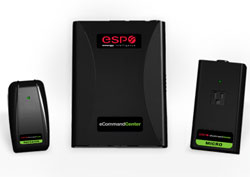 Electronic Systems Protection, Inc. (ESP) announced the launch of its new energy management and power protection platform, the eCommandCenter. ESP claims its technology is the first all-in-one solution of its kind that empowers businesses to monitor and manage actual energy consumption, protect equipment and implement sustainability programs, down to the plug level.
Using wireless energy monitoring technology, the eCommandCenter features a package of hardware and software that enables businesses to manage energy costs proactively. ESP says this new plug-level platform independently tracks the energy consumption of every connected device within a business and gives companies a comprehensive report of specific real-time usage patterns across multiple facilities. ESP’s system utilizes a wireless mesh network that can sit on either side of the user’s firewall and does not require an IP address or additional network bandwidth. The platform also has the capability to integrate energy consumption data into existing databases to enable business managers to monitor energy consumption data within their own system.
Electronic Systems Protection, Inc. (ESP) announced the launch of its new energy management and power protection platform, the eCommandCenter. ESP claims its technology is the first all-in-one solution of its kind that empowers businesses to monitor and manage actual energy consumption, protect equipment and implement sustainability programs, down to the plug level.
Using wireless energy monitoring technology, the eCommandCenter features a package of hardware and software that enables businesses to manage energy costs proactively. ESP says this new plug-level platform independently tracks the energy consumption of every connected device within a business and gives companies a comprehensive report of specific real-time usage patterns across multiple facilities. ESP’s system utilizes a wireless mesh network that can sit on either side of the user’s firewall and does not require an IP address or additional network bandwidth. The platform also has the capability to integrate energy consumption data into existing databases to enable business managers to monitor energy consumption data within their own system.
 Simply put, this is a system that allows you to track energy usage of anything that’s connected to an ESP-branded power conditioner or one of their small power monitors (that goes between your device that plugs in the wall and the outlet itself). So, the usage of power is aggregated and that information is provided to you via a web-based or SaaS-based GUI on your computer. And, statistically, knowledge works in power consumption. Typically, someone armed with the knowledge of how much energy they are using will reduce energy consumption 15 to 20 percent.
Check it all out here: http://espei.com/products/esp-ecommand-center/
Leave a Comment
Share Article
Simply put, this is a system that allows you to track energy usage of anything that’s connected to an ESP-branded power conditioner or one of their small power monitors (that goes between your device that plugs in the wall and the outlet itself). So, the usage of power is aggregated and that information is provided to you via a web-based or SaaS-based GUI on your computer. And, statistically, knowledge works in power consumption. Typically, someone armed with the knowledge of how much energy they are using will reduce energy consumption 15 to 20 percent.
Check it all out here: http://espei.com/products/esp-ecommand-center/
Leave a Comment
Share Article
 The new 60″ LED-backlit LCD PN-V600 display has what Sharp is claiming is the thinnest bezel on the market. Designed for video wall applications where you want to create a giant, almost seamless image, the PN-V600 is specified to have only a 2.4-millimeter bezel on the right and bottom and 4.1 millimeter on the left and top of the display, making the entire bezel when in a video wall configuration 6.5 millimeter. It’s designed to let you build video walls as large as 25 screens (in a 5×5 configuration).
Specified at 450 cd/m2 brightness, the PM-V600 is a full-array, LED-backlit monitor with a native 1365×768 resolution. The display is also Energy Star-qualified, using 310 watts of max power.
Full details are here: https://www.ravepubs.com/utility/documents/sharp-PNV600_PNV601+FSC.pdf
Leave a Comment
Share Article
The new 60″ LED-backlit LCD PN-V600 display has what Sharp is claiming is the thinnest bezel on the market. Designed for video wall applications where you want to create a giant, almost seamless image, the PN-V600 is specified to have only a 2.4-millimeter bezel on the right and bottom and 4.1 millimeter on the left and top of the display, making the entire bezel when in a video wall configuration 6.5 millimeter. It’s designed to let you build video walls as large as 25 screens (in a 5×5 configuration).
Specified at 450 cd/m2 brightness, the PM-V600 is a full-array, LED-backlit monitor with a native 1365×768 resolution. The display is also Energy Star-qualified, using 310 watts of max power.
Full details are here: https://www.ravepubs.com/utility/documents/sharp-PNV600_PNV601+FSC.pdf
Leave a Comment
Share Article
 InfoComm International has announced its future rotation plans for its annual InfoComm exposition and conference.
InfoComm 2013 will be held at Orlando’s Orange County Convention Center’s West Building, June 12 to 14. InfoComm 2014 will be held at Las Vegas Convention Center’s North and Central Halls, June 18 to 20. The show will rotate between the two cities in the same halls in mid-June thereafter through 2019. InfoComm has signed lease agreements with both facilities.
“InfoComm exhibitors and attendees have been well accommodated in both Orlando and Las Vegas, and we are pleased to continue our rotation between these great convention cities,” said Jason McGraw, CTS, CAE, senior vice president of expositions, InfoComm International. “Our show has experienced phenomenal growth over the past several years based in large part to the well-run convention centers, large hotel selection and premium entertainment options offered by both of these destinations.”
A schedule of future dates appears below:
InfoComm International has announced its future rotation plans for its annual InfoComm exposition and conference.
InfoComm 2013 will be held at Orlando’s Orange County Convention Center’s West Building, June 12 to 14. InfoComm 2014 will be held at Las Vegas Convention Center’s North and Central Halls, June 18 to 20. The show will rotate between the two cities in the same halls in mid-June thereafter through 2019. InfoComm has signed lease agreements with both facilities.
“InfoComm exhibitors and attendees have been well accommodated in both Orlando and Las Vegas, and we are pleased to continue our rotation between these great convention cities,” said Jason McGraw, CTS, CAE, senior vice president of expositions, InfoComm International. “Our show has experienced phenomenal growth over the past several years based in large part to the well-run convention centers, large hotel selection and premium entertainment options offered by both of these destinations.”
A schedule of future dates appears below:
- 2013 – Show 6/12-6/14, Conference 6/8-6/14, Orlando
- 2014 – Show 6/18-6/20, Conference 6/14-6/20, Las Vegas
- 2015 – Show 6/17-6/19, Conference 6/13-6/19, Orlando
- 2016 – Show 6/8-6/10, Conference 6/4-6/10, Las Vegas
- 2017 – Show 6/14-6/16, Conference 6/10-6/16, Orlando
- 2018 – Show 6/6-6/8, Conference 6/2-6/8, Las Vegas
- 2019 – Show 6/12-6/14, Conference 6/8-6/14, Orlando
Share Article

 |